
Hear a quick audio overview of Gutter Cleaning Before Winter: Prevent Ice Dams in NE Ohio.
Gutter Cleaning Before Winter: Prevent Ice Dams in NE Ohio
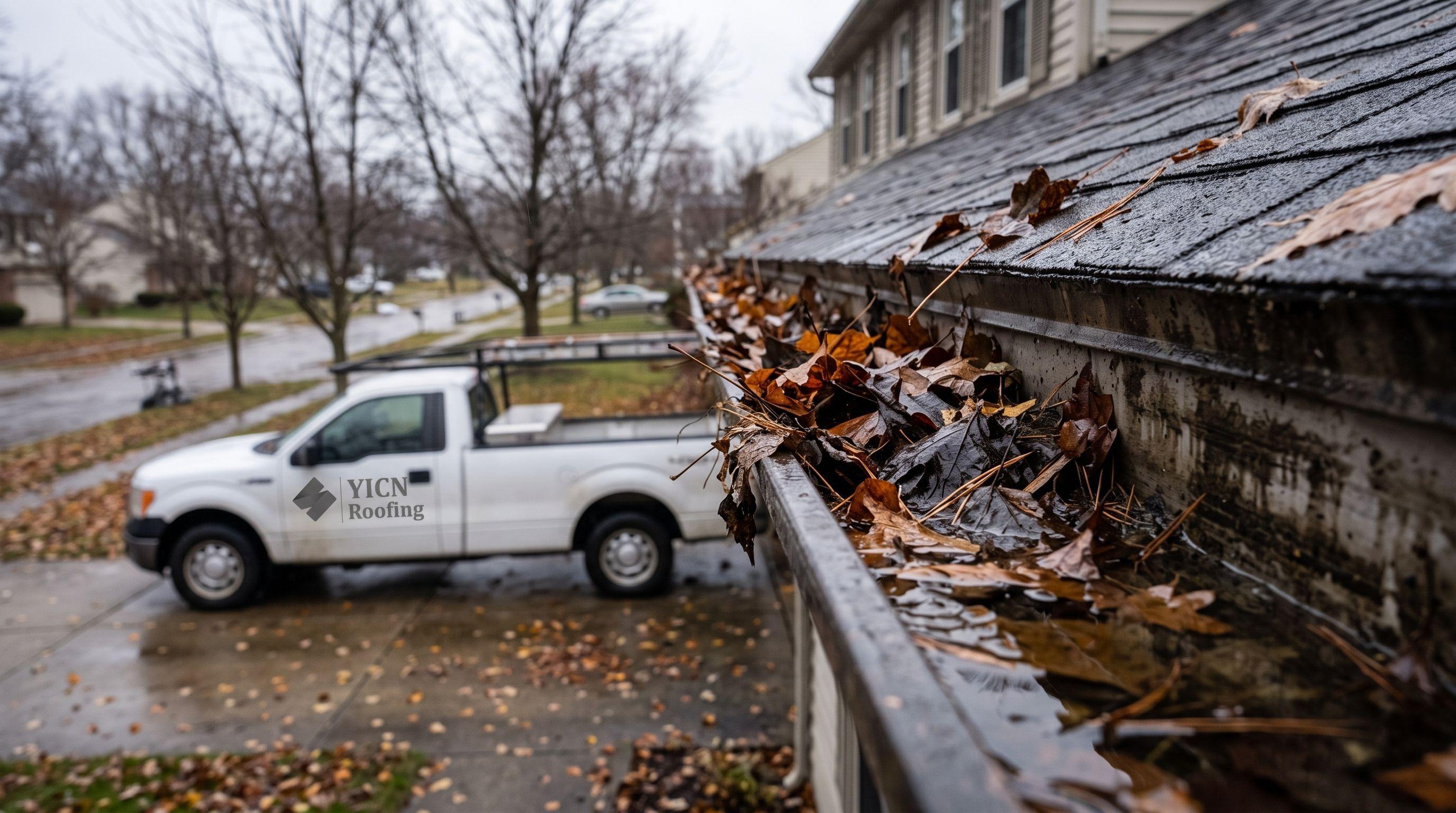
Gutter cleaning before winter is the cheapest insurance your roof gets all year. In Northeast Ohio the job must happen twice at the edges of the season, and the fall date matters most: after the last leaves drop, but before the ground freezes, because everything a clogged gutter does in summer turns into ice by January. A single inch of rain drops roughly 600 gallons of water on a 1,000 square foot roof, and in winter that water has nowhere to go when the gutters are packed.
Here is the short version: clean the gutters after leaf drop, flush the downspouts, check the pitch and hangers, and make sure water exits at least four feet from the foundation. The average professional gutter cleaning runs 119 to 234 dollars nationally, with the average at about 168. Compare that to the 7,000 to 12,000 dollars a typical ice dam insurance claim runs, and the math finishes itself.
This guide covers the Northeast Ohio timing, the winter-specific failure points, what a proper pre-winter cleaning includes, and when to call for help.
Key Takeaways
Clean gutters after the last leaves fall, ideally late October to mid November in Northeast Ohio, and always before the ground freezes.
Clogged gutters are the second half of every ice dam. Warm attic air melts snow, and the melt water pools and refreezes in a gutter that cannot drain. Prevention starts in the attic.
Professional cleaning averages about 168 dollars, with a national range of 119 to 234 dollars. Gutter-related water damage claims average far more.
Downspouts matter as much as the troughs. Water must exit at least 4 feet from the foundation, or a February freeze turns the overflow into an ice sheet on your walk.
Gutter guards reduce debris but do not eliminate winter cleaning. Fine mesh still clogs with shingle grit and seed heads.
Why Clogged Gutters Are a Winter Problem, Not a Fall Problem
A clogged gutter in June is an annoyance. The same clog in January is a structural event, and here is the chain of what happens.
Water that cannot drain freezes in place. A gallon of water weighs 8.3 pounds, and a frozen gutter is a continuous ice block sitting in a trough that was designed to hold a few pounds of flowing water. The ice expands, the hangers pull loose from the fascia board, and the weight works a seam apart or bows the run outward. By the time it thaws, you have a gutter that needs repair, not a cleaning.
The second failure is the ice dam. Warm attic air melts snow on the upper roof, the melt water runs down and refreezes at the cold eave, and the dam grows exactly where the gutter is frozen solid. The water backs up under the shingles. If the mechanism is unfamiliar, our ice dam prevention guide breaks down the full physics, but the short version is: a clean, free-draining gutter cannot hold the pool that a frozen one can.
The third failure is the ground. Overflowing gutters dump water at the foundation, the soil saturates, the freeze-thaw cycle heaves it, and by spring the grading that kept your basement dry has a negative slope. None of this shows up on the roof. It shows up in the basement, months later, when nobody connects it to gutters.
The Northeast Ohio Timing
Northeast Ohio averages about 64 inches of snow a season, and leaf drop on the deciduous side of the region stretches into mid November. That leaves a real window, and it is tighter than people think.
First week of November is the target. The maples and oaks are done, the ground has not frozen, and the first measurable snow usually waits for late November. If you clean in early October, you will be re-cleaning leaf mold out of the troughs in December. If you wait for Thanksgiving week, you are working a ladder on frozen ground with ice on the rungs.
Two-story homes shift the calculation toward professional service. National pricing runs about 119 to 234 dollars for a standard cleaning, roughly 0.95 to 2.25 dollars per linear foot, with height as the main price driver. A second story adds roughly 30 to 50 percent. For a fee measured in the hundreds, most homeowners should not be on a frozen ladder in the first place.
What a Proper Pre-Winter Cleaning Includes
A real winter-prep gutter service is more than debris removal, and this is what to expect if you hire it out.
Clear the troughs by hand. Leaf blowers move dry leaves but pack wet leaf mold against the outlet. The downspout connection is where every clog starts.
Flush with water. Running a hose down the trough proves the pitch is right and shows slow drainage, which means a sag or a hidden clog in the elbow. If water stands in a run, the hangers have loosened and the run needs re-pitching before ice finds it.
Test every downspout from the top. A backflush through the bottom outlet, then a hard flush from the top, proves the line is open. A partially blocked downspout freezes first, because moving water drains and standing water does not.
Check hangers, seams, and the fascia. Loose hangers under ice load rip out of the fascia board, and a soft or rotted fascia spot is a fall repair, not a January one.
Confirm the discharge point. Downspout extensions should carry water at least 4 feet past the foundation. In winter, a splash block at the base that freezes over will dam the downspout itself, so the outlet needs a clear path.
The Gutter Guard Question, Answered Honestly
Guards reduce the frequency of cleaning. They do not eliminate it, and the winter-specific failure is worth knowing.
Fine mesh guards clog with shingle grit and airborne seed heads on top of the mesh. Water sheets over the clogged mesh and pours off the edge, which is the same failure as no gutter at all. Reverse-curve designs handle grit better but can still grow an ice lip at the nose in sustained freeze periods. If you are weighing options, our gutter guards cost guide covers Cleveland pricing and materials, and the materials comparison explains why seamless runs fail at the seams far less than sectional ones.
The honest rule: with guards, a pre-winter inspection and a light cleaning replaces a full cleaning. Without guards, the full service above is non-negotiable before the first snow.
What Skipping It Actually Costs
The failure stack, priced.
A cleaning averages 168 dollars. Emergency gutter repair after a hanger pulls free of a frozen fascia runs 150 to 500 dollars for a section. A full gutter replacement on a typical two-story Northeast Ohio home runs 1,000 to 2,500 dollars depending on material. The average water damage claim traced to gutter failure, soaked basements, rotted soffit, foundation seepage, sits around 15,400 dollars. And if the clog feeds an ice dam that backs water under the shingles, the interior claim average runs 7,000 to 12,000 dollars, and winter storm claims only pay when the damage is sudden and documented, not when it is months of neglect that froze.
Every one of those numbers is downstream of the same 168 dollar service.
When to Do It Yourself, and When Not To
If the gutter line is reachable from a step ladder on flat ground, the troughs are dry, and the roof pitch is walkable, a competent homeowner can do a pre-winter cleaning in an afternoon with gloves, a trowel, and a hose. Do it before the ground freezes, wear eye protection, and never work the ladder alone.
Call a professional when the run is above the first story, when the roof is iced or the ground is frozen, when the downspout line is buried or elbows are sealed, or when fascia damage is already visible. Ladder falls are the leading cause of home injury deaths in the country, and January is never the month to join the statistic.
FAQ
When should gutters be cleaned before winter in Northeast Ohio?
Late October to mid November, after the last leaves drop and before the ground freezes. Cleaning earlier means re-cleaning leaf drop, and cleaning later means working ice. The first week of November is the practical target for most of Cuyahoga, Summit, and Stark counties.
Can clogged gutters really cause ice dams?
Yes. Ice dams form when warm attic air melts snow and the water refreezes at the cold eave, and a gutter packed with leaves is where the melt water pools and freezes first. A free-draining gutter cannot stop every dam, but a frozen clogged one guarantees the melt water has nowhere to go. The attic work in our ice dam guide is the other half of the fix.
How much does professional gutter cleaning cost in 2026?
About 119 to 234 dollars for a standard single-home cleaning, with a national average near 168. Pricing runs roughly 0.95 to 2.25 dollars per linear foot, with story height, gutter length, and condition driving the total. Two-story homes typically add 30 to 50 percent.
Do gutter guards eliminate winter cleaning?
No. Guards cut the frequency and volume, but fine mesh collects shingle grit and seed heads, and any guard can grow an ice lip at the nose during a sustained freeze. With guards, plan a pre-winter inspection and a light clearing instead of a full cleaning.
What happens if I skip winter gutter cleaning?
The trough freezes solid, hangers pull from the fascia, seams separate, and melt water backs up into the ice dam zone. Downstream costs include 150 to 500 dollars in section repairs, 1,000 to 2,500 dollars for premature replacement, and water damage claims that average in the five figures when the failure reaches the basement or interior.
Is it safe to clean gutters when it is cold?
Only above freezing, on dry flat ground, with a helper. Below freezing the rungs ice, wet leaves freeze into solid blocks, and the roof is off limits entirely. If the safe window closes, schedule the cleaning for the first thaw rather than forcing it in dangerous conditions.
Conclusion
Before the first snow: troughs clear, downspouts flushed, hangers tight, discharge 4 feet from the foundation. That sequence, done in the first week of November, is the difference between gutters that carry the spring thaw and gutters that spend January as ice blocks.
YICN Roofing does pre-winter gutter cleaning, downspout checks, and ice dam inspections across Northeast Ohio. If you want it handled before the window closes, call or text (937) 756-2124, or request a free inspection and we will tell you honestly whether your gutters will survive the season or need work first.
Frequently Asked Questions
About the Author: Kevin Stone , chairman and founder of YICN Roofing (Your Insurance Claims Network), Northeast Ohio's premier storm damage roofing contractor serving homeowners throughout Bedford Heights and the surrounding 30-mile radius. Operating from the company's headquarters at 5420 Mardale Ave, Bedford Heights, OH 44146, Kevin has transformed YICN Roofing into a top-rated roofing company with an A+ Better Business Bureau score and over 100 satisfied customers who trust his expertise for their most critical roofing needs. Since establishing YICN Roofing, Kevin has built a reputation that extends far beyond traditional roofing services. His comprehensive understanding of the insurance claims process, combined with decades of hands-on roofing expertise, has positioned YICN Roofing as the go-to contractor for Northeast Ohio homeowners facing storm damage, emergency repairs, and comprehensive roof restoration projects. Available 24 hours a day at (937) 756-2124, Kevin ensures that no homeowner in Bedford Heights, Cleveland, Akron, or surrounding communities is left vulnerable to the elements when roofing emergencies strike. Northeast Ohio Roofing Expertise and Regional Understanding Kevin's deep expertise in Northeast Ohio roofing stems from his intimate understanding of the region's unique weather challenges and architectural requirements. The Greater Cleveland area, including Bedford Heights and surrounding communities, faces some of the most demanding weather conditions in the Midwest. Lake-effect snow systems regularly dump heavy loads on residential roofing systems, while spring and summer storms bring devastating wind and hail damage that can compromise even the most well-maintained roofs. Throughout his career, Kevin has personally overseen thousands of roofing projects across Northeast Ohio, from emergency tarping services during severe storms to complete roof replacements for homes damaged by hail, wind, and ice. His experience spans residential neighborhoods in Bedford Heights, where older homes require specialized attention to maintain their architectural integrity, to newer developments in surrounding communities that benefit from modern roofing materials and installation techniques.