
Hear a quick audio overview of Ice Dam Prevention: The Northeast Ohio Homeowner Guide.
Ice dams are not a weather problem. They are a heat problem. Snow melts on a warm roof, the water runs down to the cold eave, and it freezes there into a ridge of ice that traps the next round of meltwater behind it. That trapped water backs up under the shingles, soaks the roof deck, and drips into your ceilings and walls. Every ice dam traces back to the same source: heat escaping from your house into the attic.
The fix is the same for almost every home in Northeast Ohio: seal the air leaks, add insulation to at least the code minimum of R-49, ventilate the attic so the roof deck stays cold, and keep the gutters clean so melting water has somewhere to go. Do those four things before the first snow and the ice dam risk collapses. Skip them and a normal Cleveland winter, about 64 inches of snow in a season, keeps re-building the problem on the same stretches of your eaves.
This guide explains exactly how ice dams form on Northeast Ohio roofs, the prevention sequence in the order that matters, what to do when a dam has already formed, and what the repair and insurance picture looks like in 2026 dollars.
Key Takeaways
Ice dams form when attic heat melts snow high on the roof and it refreezes at the cold eave. A cold roof deck is the entire game.
Professional steam removal costs 300 to 2,000 dollars, with most jobs landing between 500 and 1,500 dollars. The average insurance claim from an ice dam runs 7,000 to 12,000 dollars.
Air sealing and insulation to R-49 minimum (Energy Star recommends R-60 for our climate) prevents most ice dams permanently.
Never chip ice with an axe, salt the roof, or climb an icy ladder. Every winter, emergency room visits follow those three mistakes.
Clean, unclogged gutters are necessary but not sufficient. A gutter full of leaves turns a small dam into a big one.
How an Ice Dam Forms, Step by Step
An ice dam needs three ingredients: snow on the roof, heat under the roof deck, and cold air at the eaves. Northeast Ohio supplies all three reliably from November through March.
Heat rises into the attic through gaps around recessed lights, chimneys, bathroom fans, and the attic hatch. The roof deck warms a few degrees above freezing, 32 degrees, and the bottom layer of snow melts against it. The water runs down the roof slope as a thin sheet until it passes the exterior wall and reaches the unheated overhang. There the deck temperature is the same as the air, well below freezing, so the water snaps into ice.
Each cycle adds a layer. Snow falls, heat melts it, the eave refreezes it. After a few weeks you have a dam 4 to 8 inches thick at the eave, and every bit of meltwater above it pools in a growing lake with nowhere to go but up, under the shingles, and into the house.
Lake-effect snow makes our region a special case. Cleveland's snow comes in repeated heavy bursts, so a roof gets a fresh insulating blanket of snow, the kind that holds meltwater, over and over. The same storm that dumps 10 inches on Tuesday rebuilds the dam by Thursday. Homes near the lake, from Bay Village to Rocky River, see the deepest snow and the most repeat ice dam calls.
The Prevention Sequence, in Order
1. Air Seal the Attic First
Air sealing comes before insulation, and most homeowners get this backward. Fiberglass batts slow heat that moves through them by conduction, but warm air blows right through gaps and joints. A half-inch gap around a recessed light can leak more heat than an entire under-insulated attic floor.
The standard approach: pull back existing insulation, seal every top plate, wire hole, duct chase, chimney gap with fire rated caulk or foam, and build an insulated cover box over the attic hatch. A blower door test before and after shows the difference. This work costs a few hundred to about 1,500 dollars for a typical attic and is the single highest value winter prep task on the list.
2. Insulate to R-49 Minimum, R-60 Ideally
Ohio residential code sets R-49 as the minimum attic insulation for new construction, and Energy Star recommends R-60 for the Cleveland climate zone. Most homes built before 1980 sit far below both numbers. The field test is simple: if you can see the tops of your ceiling joists above the insulation, you have roughly R-19 or less, a third of the code minimum.
Blown fiberglass or cellulose over existing batts is the usual fix, at roughly 1.00 to 2.50 dollars per square foot installed. A typical 1,000 square foot attic lands between 1,000 and 2,500 dollars, and the same upgrade cuts heating bills by about 10 to 15 percent, so it pays a second dividend all winter.
3. Ventilate So the Deck Stays Cold
Insulation slows heat from below, but ventilation removes whatever gets through. A balanced system has intake vents in the soffits and exhaust vents at the ridge, so cold outside air washes along the underside of the deck and carries heat away before it can melt snow. The target is a deck temperature close to the outside air temperature across the whole roof.
Common failure points: soffit vents crushed by insulation baffles installed wrong, ridge vents capped, or a whole house fan blocking the airflow. If snow melts on your roof in stripes while neighbors' roofs stay white, look at ventilation gaps first.
4. Clean the Gutters Before the Freeze
A clogged gutter does not cause an ice dam, but it makes every dam worse. Melting water has no exit route, so it freezes solid in the gutter and extends the dam's footprint across the whole eave. After the last leaves fall and before the ground freezes, clear the gutters and downspouts, flush them with a hose, and confirm water runs out freely. Our gutter cleaning before winter guide covers the full sequence, and homes with seamless gutters and oversized downspouts drain meltwater far faster than sectional systems.
What To Do When an Ice Dam Has Already Formed
If a dam is forming now, the safe options are limited.
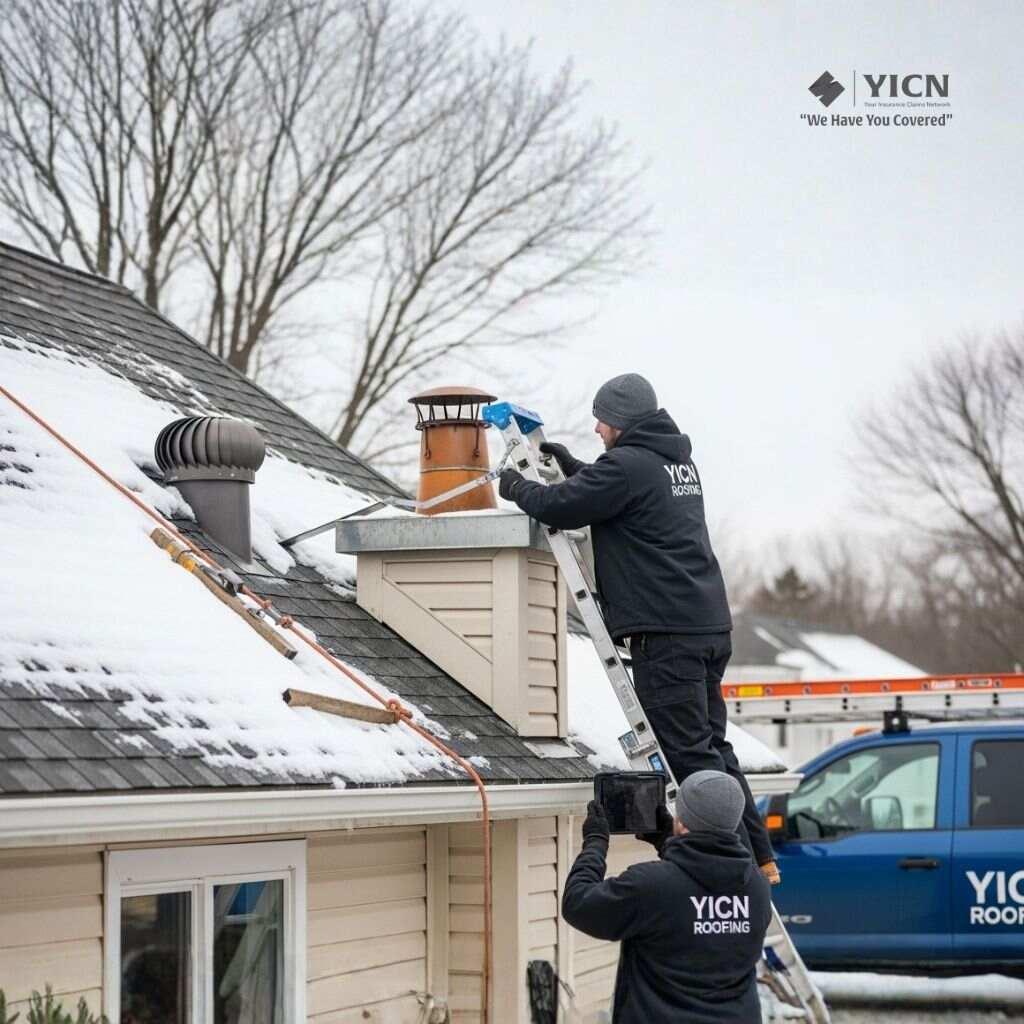
Steam removal is the professional standard. A steamer melts a channel through the dam at low pressure without touching the shingles, and the pooled water behind it drains. Costs run 300 to 2,000 dollars depending on dam size and roof pitch, with most homes paying 500 to 1,500 dollars. That is real money, but the average ice dam insurance claim runs 7,000 to 12,000 dollars in interior damage, so it is cheap by comparison.
A roof rake can pull fresh snow off the eaves from the ground. Use it standing on the ground only, pulling snow down, never chopping at ice. Raking the lower 3 to 4 feet of the roof removes the raw material a dam needs.
Do not do these things: never chip the ice with an axe or hammer, the impact fractures shingles and voids manufacturer warranties. Never spread rock salt, it kills the lawn, corrodes the gutters and fasteners, and chews up the shingles. Never pour hot water from a ladder, the refreeze is faster than you can climb down, and icy ladders are how homeowners end up in the emergency room with the same storm that damaged the roof.
Interior damage already visible? Photograph everything before cleanup, keep the receipts, and read our guide on what insurance covers for roof leaks. Dwelling coverage in a typical policy pays for the water damage inside, though it will not pay to fix the attic insulation gaps that caused the dam.
The Honest Cost Picture, 2026
Air sealing an attic: 300 to 1,500 dollars
Insulating a typical attic to R-49 or R-60: 1,000 to 2,500 dollars
Professional ice dam steam removal: 300 to 2,000 dollars, most 500 to 1,500 dollars
Interior repairs after a dam backup, ceilings, insulation, paint, mold: 7,000 to 12,000 dollars
Preventive roof inspection before winter: 0 dollars with our free inspection
The prevention sequence costs less than one average claim and keeps paying for 15 to 20 years of winters. That is the whole argument, and it is why every roof we inspect in October and November includes an ice dam risk check at the eaves and in the attic.
FAQ
What is the fastest way to prevent ice dams?
Seal attic air leaks, add insulation to R-49 or better, and confirm soffit and ridge vents are open so the roof deck stays at outdoor temperature. Do it in fall, before the first snow.
Do gutter guards prevent ice dams?
No. Gutter guards keep leaves out, which helps meltwater drain, but ice dams form because of attic heat, not leaf clogs. Guards are worth having for maintenance reasons, but they are not an ice dam solution.
Can I remove an ice dam myself?
Only the snow, with a roof rake from the ground. The ice dam itself should come off by a professional with steam equipment. Chipping, salting, and hot water all damage shingles or create worse ice.
Will insurance pay for ice dam removal?
Usually not the removal itself, but yes for the resulting interior water damage under dwelling coverage, minus your deductible. Document everything with photos before any cleanup begins.
How thick does an ice dam get in Northeast Ohio?
Dams of 4 to 8 inches are typical after a few lake-effect snow cycles, and eaves on the north side of the house often grow thicker because they never see sun.
Do heat cables prevent ice dams?
They manage them, they do not prevent them. Heat cables melt a channel through the ice so water drains, but the dam keeps forming as long as attic heat keeps melting snow. Fix the attic and most homes do not need cables at all.
Conclusion
This article is part of our winter series. Start with the complete roof maintenance before snow guide for the full six-task checklist, or read our pre-winter inspection checklist next.
Ice dams are a construction problem wearing a weather costume. Air seal, insulate, ventilate, and clear the gutters, and the roof stays cold no matter what the lake sends. The work costs less than one insurance claim, qualifies as normal home maintenance, and takes one October weekend plus one attic contractor visit.
YICN Roofing checks eaves, gutters, and attic insulation as part of every winter preparation inspection across Northeast Ohio. Call or text (937) 756-2124 before the first real snow, and we will tell you straight whether your roof is a dam waiting to happen or ready for January.
Frequently Asked Questions
About the Author: Kevin Stone , chairman and founder of YICN Roofing (Your Insurance Claims Network), Northeast Ohio's premier storm damage roofing contractor serving homeowners throughout Bedford Heights and the surrounding 30-mile radius. Operating from the company's headquarters at 5420 Mardale Ave, Bedford Heights, OH 44146, Kevin has transformed YICN Roofing into a top-rated roofing company with an A+ Better Business Bureau score and over 100 satisfied customers who trust his expertise for their most critical roofing needs. Since establishing YICN Roofing, Kevin has built a reputation that extends far beyond traditional roofing services. His comprehensive understanding of the insurance claims process, combined with decades of hands-on roofing expertise, has positioned YICN Roofing as the go-to contractor for Northeast Ohio homeowners facing storm damage, emergency repairs, and comprehensive roof restoration projects. Available 24 hours a day at (937) 756-2124, Kevin ensures that no homeowner in Bedford Heights, Cleveland, Akron, or surrounding communities is left vulnerable to the elements when roofing emergencies strike. Northeast Ohio Roofing Expertise and Regional Understanding Kevin's deep expertise in Northeast Ohio roofing stems from his intimate understanding of the region's unique weather challenges and architectural requirements. The Greater Cleveland area, including Bedford Heights and surrounding communities, faces some of the most demanding weather conditions in the Midwest. Lake-effect snow systems regularly dump heavy loads on residential roofing systems, while spring and summer storms bring devastating wind and hail damage that can compromise even the most well-maintained roofs. Throughout his career, Kevin has personally overseen thousands of roofing projects across Northeast Ohio, from emergency tarping services during severe storms to complete roof replacements for homes damaged by hail, wind, and ice. His experience spans residential neighborhoods in Bedford Heights, where older homes require specialized attention to maintain their architectural integrity, to newer developments in surrounding communities that benefit from modern roofing materials and installation techniques.