
Hear a quick audio overview of Will Shingles Seal Properly in Cold Weather?.
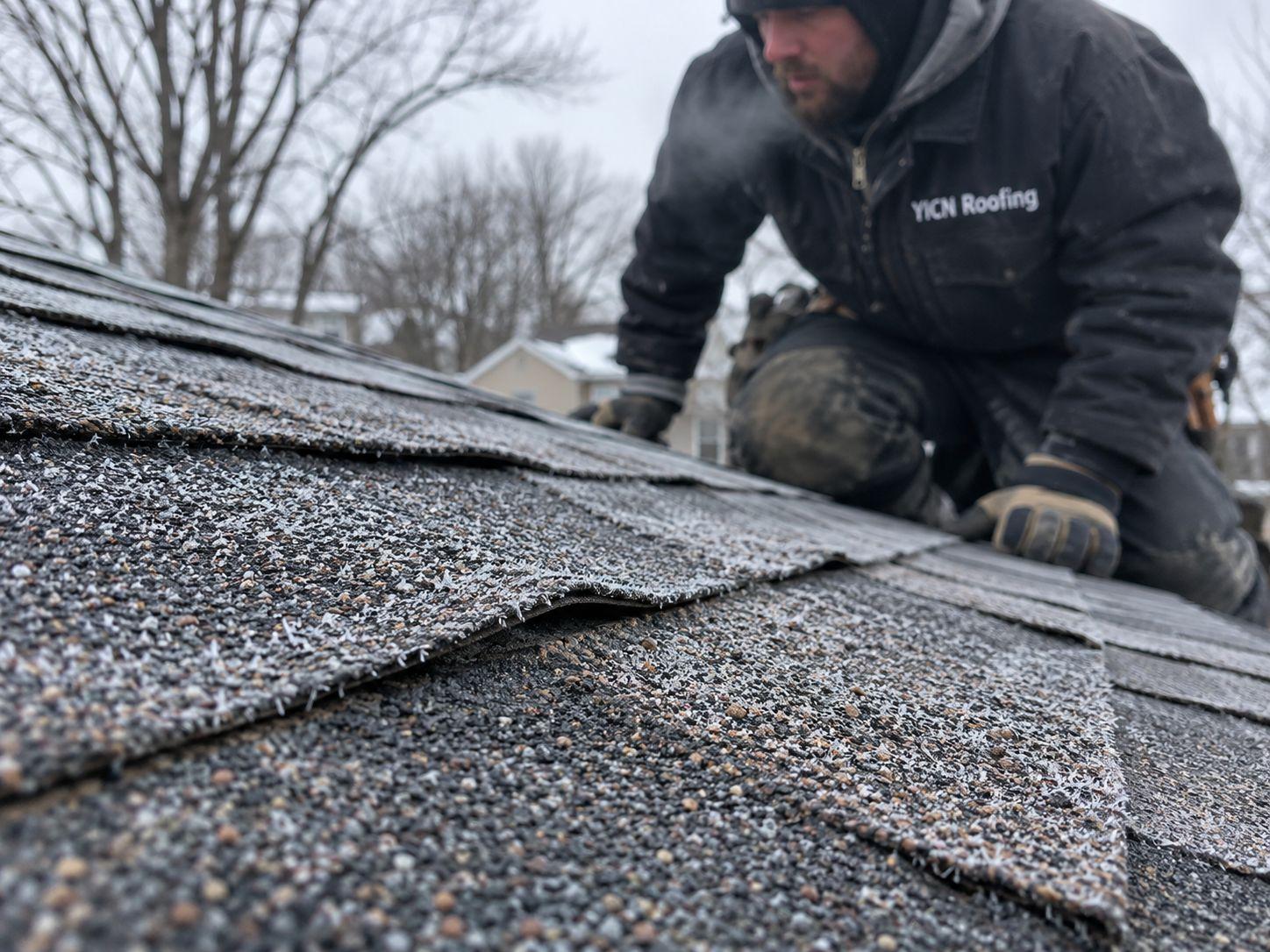
Yes, with one honest asterisk. Shingles installed in cold weather do not finish sealing until the first sustained warm spell, which in Northeast Ohio usually means late March into April. Until then, they are held by nails and by the hand applied asphalt cement of the cold weather protocol. That combination is fully sound and warranty-backed. What it is not, yet, is the heat fused bond the manufacturer designed. This guide explains the difference, the timeline, and how to know your winter roof will seal.
It is part of our series on replacing a roof before winter and pairs with our guide to the temperature threshold for shingle installation.
Key Takeaways
- The self-seal adhesive activates at about 70 degrees roof surface temperature in direct sun, per GAF's installation guidance.
- Winter installs rely on the cold-weather protocol: 4 spots of asphalt roof cement per shingle at vulnerable edges.
- The final bond completes in the first sustained warm spell, typically late March into April.
- A protocol-correct winter install carries the same warranty as a summer one, including wind ratings of 110 mph to 130 mph.
- A free spring checkup after the first warm weeks confirms the seal took.
How the Self-Seal Strip Actually Works
Every asphalt shingle carries a continuous adhesive strip under its leading edge. Warmth softens it, direct sun heats the roof surface to roughly 70 degrees, and the weight of the overlying course presses the two together into a fused, wind-resistant bond. The process needs sustained warmth, typically a few warm days to weeks. Below the 40 degree installation threshold, the strip stays dormant, which is precisely why the manufacturer protocol exists: the cement does the holding job the sun has not done yet.
The Two-Stage Winter Seal, Step by Step
Stage one, install day. Nails provide the structural fastening, four spots of asphalt roof cement per shingle secure the vulnerable edges, and nail heads get sealed. The roof is complete, weather-tight, and done to specification. It simply has not fused yet.
Stage two, spring warmth. The first sustained warm spell softens the adhesive strips, the sun does its work over days, and the roof becomes the single fused membrane the manufacturer designed. Nothing extra happens, no crew returns, and no homeowner action is needed. The roof finishes itself.
What Can Go Wrong, and How to Prevent It
Owens Corning documents the same cold-weather expectations for its Duration shingles. The only real failure mode is skipped protocol. No cement, no sealed nail heads, brittle handling, and the roof leans entirely on nails through the windiest months. Tabs lift in March gales. Fastener holes weep. By the time anyone notices, the fix costs 500 dollars to 2,000 dollars in rework, and it is entirely preventable by asking one question before hiring: will you follow the manufacturer cold-weather protocol below 40 degrees? Reputable crews answer with the document. A crew that shrugs is telling you to wait for spring replacement or find another roofer.
The Northeast Ohio Sealing Calendar
Sealing weather arrives on a schedule here, in a region that averages about 64 inches of snow a season. February offers isolated 40-degree days but rarely the sustained stretch the adhesive wants. March delivers the first real runs of sun-warmed roof surfaces, and by mid April, most winter-installed roofs across the region have fully fused. That is why a winter install is not a compromise: the roof spends January protected by the protocol and April protected by the bond, with no gap between. The same calendar also explains the pricing: winter replacement typically runs 10% to 20% below peak season, and an asphalt roof that starts life this way still reaches the 20 to 30 years of service the manufacturer rates it for.
Does Insurance or Warranty Treat Winter Roofs Differently
No, as long as the protocol was followed. Manufacturer warranties cover cold weather installs installed per specification, and workmanship warranties from professional crews apply year round. The one caution is documentation: if a winter install later has an issue connected to sealing, the installer's protocol records, photographs, and cement type are what settle it. Ask for the install day photos. Our winter replacement guide covers what documentation should exist.
The Spring Checkup habit
The best winter install ends with a free spring checkup: a walk of the roof after the first warm weeks to confirm tabs have fused flat, no lifting edges remain, and the seal is complete. It takes 30 minutes and it converts a good install into a documented one. The timing is predictable enough that the whole replacement still finishes in about 2 to 3 working days, per our winter replacement timeline, and the checkup lands on the first warm week of April. Any crew confident in its winter work offers it without being asked.
What to Verify in the Contract Before Winter Work Starts
A winter install succeeds on paperwork as much as technique. Before you sign, confirm five things in writing:
The manufacturer protocol is named. The contract or scope should say the crew will hand-seal along rakes, ridges, and hip edges, and seal nail heads, when temperatures run below 40 degrees.
Fastening schedule is specified. Six nails per shingle, high-wind pattern, matches the wind rating on the bundle. Four nails quietly cuts the rating.
Weather contingency is spelled out. Who decides to pause, how a half-finished roof gets dried in, and what happens to the schedule when a thaw window closes.
The spring checkup is included, not offered. A free post seal walk of the roof after the first warm weeks should be in the scope, in writing.
Warranty language survives the season. The manufacturer warranty should be registered at install, and the workmanship warranty should not quietly exclude cold weather installation.
When a Winter Seal Goes Wrong, and What It Looks Like
Failures announce themselves in a predictable order. First, tabs flutter at the rake edges in a 40 mph gust. Then a shingle or two release entirely after a March wind event. Then a ceiling stain appears after the first soaking April rain, usually at a valley or a penetration, because that is where water collects first when tabs are not flat. By the time the stain shows, the missing step is almost always one of two: cement that was specified but never applied, or fasteners that skipped the high-wind schedule.
The repair is straightforward when caught in spring. A crew re-seats lifted tabs, re-cements the edges, and re-checks fastener penetration, typically 150 dollars to 400 dollars in labor for an isolated zone, versus 500 dollars to 2,000 dollars to rework a full slope that was installed without any protocol at all. What cannot be repaired is the interior damage a winter of flapping tabs causes. That is why the spring walkthrough matters: it catches the flutter before the water.
FAQ
How long does it take for shingles to seal in cold weather?
Until the first sustained warm spell, typically late March into April in Northeast Ohio. Until then, nails and hand-applied cement do the holding.
Will my winter roof leak before the shingles seal?
Not from sealing delay. A protocol-correct install is weather-tight from day one. Sealing adds wind resistance, not water tightness.
Can I help shingles seal faster?
No, and attempts like walking the roof to press tabs do more harm than good. Warmth and time do the work.
What if a shingle blows off before spring?
It happens rarely on protocol installs, and it is a 150 dollars to 400 dollars repair. Document it and call the installer, since it may point to a skipped step worth reviewing.
Do hand-sealed shingles ever need resealing?
No. The cement holds permanently, and the spring bond takes over the load as it fuses.
Is it better to just install in warm weather?
If the roof can safely wait, warm weather is simpler. If it cannot, the protocol exists so you do not have to gamble on a winter of leaks, and skipping it invites an insurance claim instead.
The Bottom Line
Winter shingles seal properly, on a two stage schedule the manufacturer designed for. YICN Roofing follows the protocol, documents the install, and walks the roof again in spring for free. Call or text (937) 756-2124 and ask us what your roof needs, in any season.
Frequently Asked Questions
About the Author: Kevin Stone , chairman and founder of YICN Roofing (Your Insurance Claims Network), Northeast Ohio's premier storm damage roofing contractor serving homeowners throughout Bedford Heights and the surrounding 30-mile radius. Operating from the company's headquarters at 5420 Mardale Ave, Bedford Heights, OH 44146, Kevin has transformed YICN Roofing into a top-rated roofing company with an A+ Better Business Bureau score and over 100 satisfied customers who trust his expertise for their most critical roofing needs. Since establishing YICN Roofing, Kevin has built a reputation that extends far beyond traditional roofing services. His comprehensive understanding of the insurance claims process, combined with decades of hands-on roofing expertise, has positioned YICN Roofing as the go-to contractor for Northeast Ohio homeowners facing storm damage, emergency repairs, and comprehensive roof restoration projects. Available 24 hours a day at (937) 756-2124, Kevin ensures that no homeowner in Bedford Heights, Cleveland, Akron, or surrounding communities is left vulnerable to the elements when roofing emergencies strike. Northeast Ohio Roofing Expertise and Regional Understanding Kevin's deep expertise in Northeast Ohio roofing stems from his intimate understanding of the region's unique weather challenges and architectural requirements. The Greater Cleveland area, including Bedford Heights and surrounding communities, faces some of the most demanding weather conditions in the Midwest. Lake-effect snow systems regularly dump heavy loads on residential roofing systems, while spring and summer storms bring devastating wind and hail damage that can compromise even the most well-maintained roofs. Throughout his career, Kevin has personally overseen thousands of roofing projects across Northeast Ohio, from emergency tarping services during severe storms to complete roof replacements for homes damaged by hail, wind, and ice. His experience spans residential neighborhoods in Bedford Heights, where older homes require specialized attention to maintain their architectural integrity, to newer developments in surrounding communities that benefit from modern roofing materials and installation techniques.